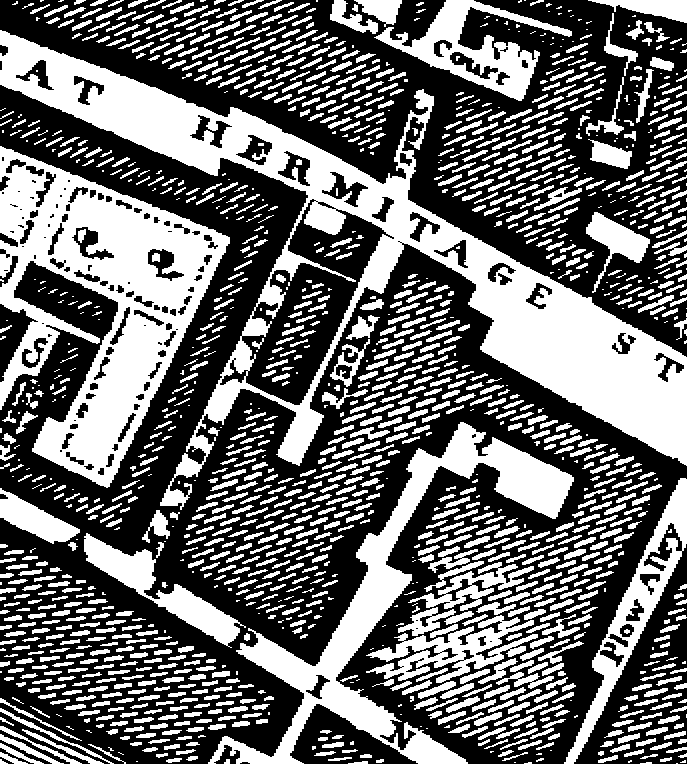
Flint glass was being made at this Glass House in Wapping, London by 1684 and a Lion and Coronet seal was used to mark the glass, but none of these have yet been identified. The glass house was advertised in the London Gazette on 4 December 1684: 'At his Royal Highness's Glass-house near the Hermitage Stairs in Wapping, are exposed for sale all manner of Flint Glasses, and likewise all sorts of Ordinary and Green...all the Glasses being marked with a Lion and Coronet. Glasshouse yard is shown in the top right hand corner of the part of the 1746 map of London shown below, but there is no indication of an actual building, as with the near-by Goodman's Yard Glasshouse. The Duke of York's ownership probably ceased in 1685, and would have certainly ceased by 1688.
It is probably the glass house in Ratcliffe that the Royal Society obtained glass ware from in 1661. This would be consistent with an advertisement in the London Gazette 7 August 1693: "Mr Isaac Dehew, at the Adam & Eve, Ratcliffe highway making Looking Glasse, Crown Glass, Bottles, Chymical Glass all at one furnace". The du Houx family were well known glass makers who had originated in Lorraine. H.J.Powell in his Glass Making in England mentions members of the Bowles family making crown glass at the Cock Hill glass house in Ratcliffe, some time after 1691. There is no evidence that the glasshouse made drinking glass.