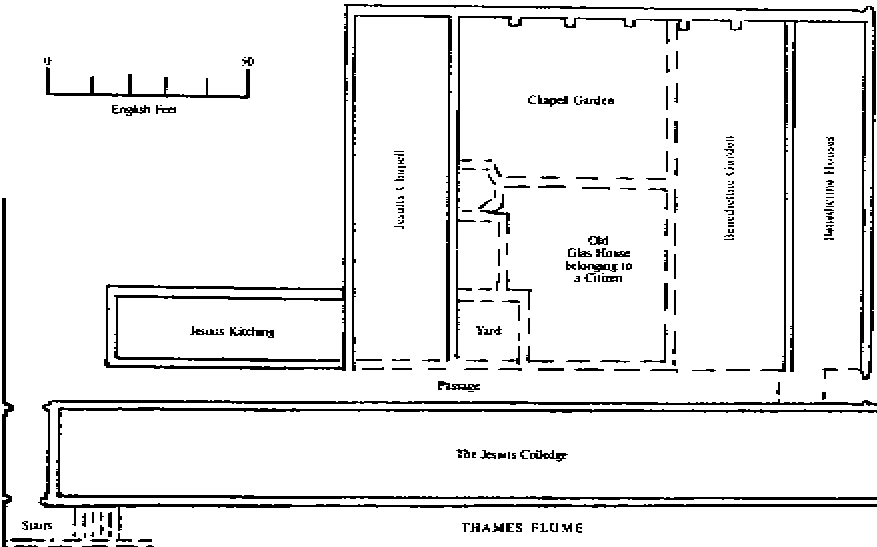
There were two glass houses at the Savoy, the one owned by Ravenscroft being the most famous. The former position of one of these is shown on a sketch layout made by Sir Christopher Wren in 1696.
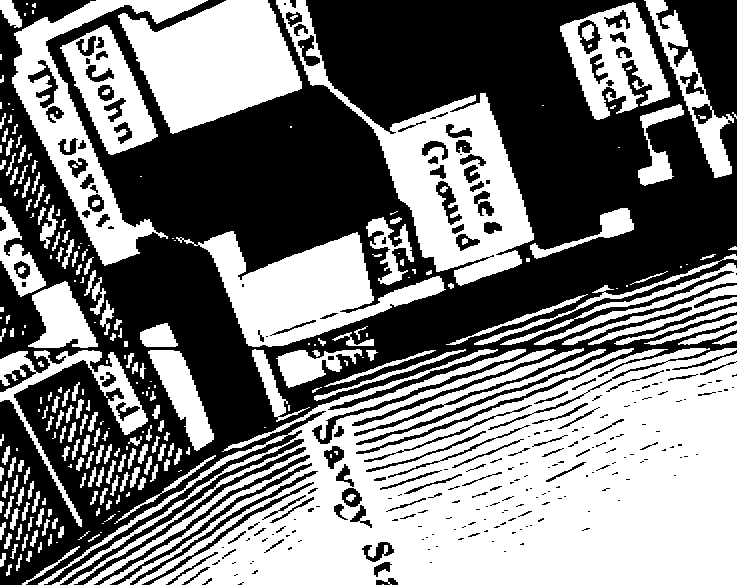
The site is also shown on this part of a 1746 London map, but with no references to glass houses.
Ravenscoft set up his glass house in the Savoy (at the riverside) in July 1673. He started with only one 'chair' but by 1674 this had increased to two and by 1678 to three. In Christmas 1681 the lease was taken over by Hawley Bishopp, who is last mentioned in 1688. Bishopp had probably taken over production there in February 1681/2 when he made an agreement to supply the Glass Sellers company. Alberti, the Venetian secretary in London refers to this as one of the "Two new furnaces lately opened for very fine large crystal" in September 1673. On Tuesday 29th July 1673, Robert Hooke records in is diary: "..with Dr Wren to the new glasshouse at the Savoy. saw calcind flints as white as flower, Borax, Niter and tartar, with which he made his glasse he denyd to use arsenick he shewd pretty representations of Agates by glasse &c". Then on Saturday 28th February 1673/4 recorded: "Lazenby affirmed that he saw the man at the Savoy for making his crystall put into the pot first a layer of borax then a Layer of Sand then of Niter. of sand borax the 2/3 of the pot was filld that being putt into the fire it boyld and made a great noyse. Afterwards it settled and the...with an iron Ladle took off the Skum. His flints he heat and quenched often and then beat them to powder in wooden menters".
However, the situation is complicated because in August 1676 Francis Ravenscroft of London, gentleman, signed a lease with Henry Killigrew, Master of the Savoy for part of the master's Lodgings and for all that part which Hawley Bishop had previously occupied. The lease was for eighteen years and stated 'whereas the said Francis Ravenscroft doth make glass in the place where the stable formerly stood, he may not burn any coal or any fuel save wood only'. This or another glass house was later run by Henry Holden. He was a glass maker of considerable experience, having been a partner to the netherlandish glass maker John Colenet in 1662, and in late 1682 or early 1683, he received an appointment as glass maker to the King and authority to put the royal arms on all the glasses made by his orders. In the London Gazette 16 April 1683 Holden advertised that he did not use any noxious ingredients in making all sorts of glass. In 1689 he was succeeded by Philip Dallow as royal glassmaker (at Saltpeter Bank, a bottle glasshouse) and probably died that year. The Glass Seller's representative at the Savoy from 1685 was John Newark.