|
|
|
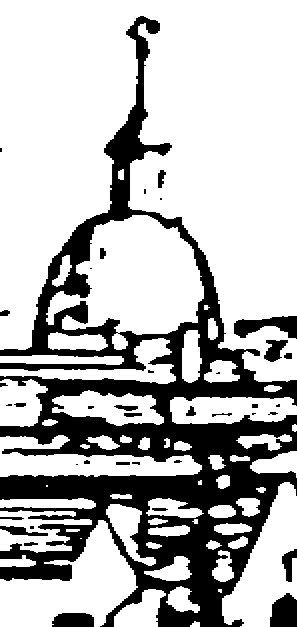
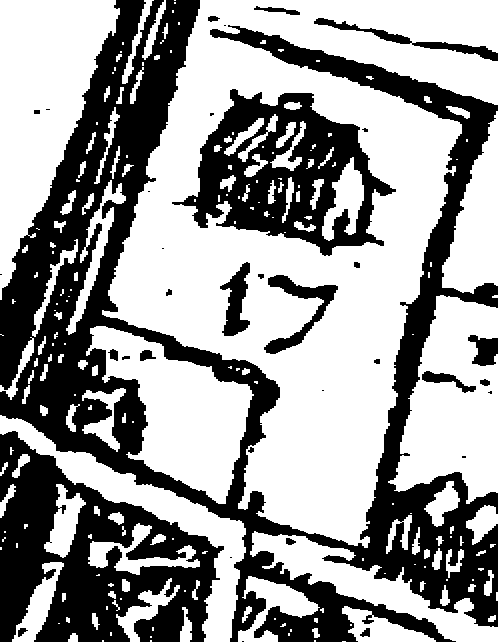
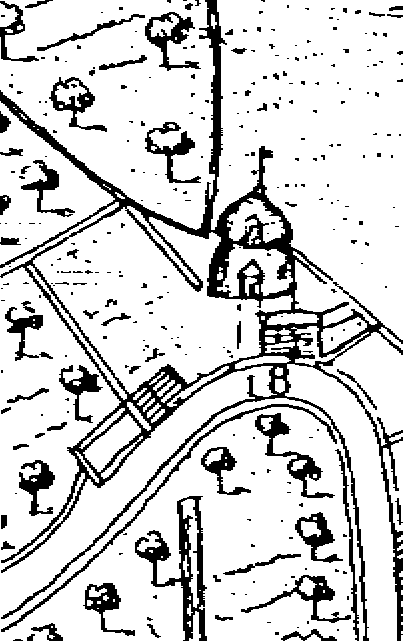
The earliest seventeenth century reference to probable vessel glass making in King's Lynn itself is on the 1680 map referenced above. There was an earlier bottle glass house to the west of the main river which is proably where Isaac Harrison glass maker recorded in 1649/50 worked. A vessel glass house was recorded again in 1693, when it was in the possession of the Jackson family, but was then apparently on a different site, since the former glass house was given over to chapel. Francis Jackson was involved in a number of glass houses in Southwark, but the King's Lynn glass house was apparantly run by his father. Houghton in 1696 lists both a bottle glass house and a glass house producing "Flint Green and Ordinary" glass in his 1696 list. A glass house is recorded in c.1710, and again in 1725, farther to the west than the 1680 one. This is shown in the second illustration, but it is not clear if this was the same one that was started by the Jacksons. This later glass house is very similar in shape to the illustration of that at the Minories, and that shown on a trade card . The glass houses are mentioned in Francis Jackson's petitions against the war tax on glass in 1697 where he claimed 'The duty on Glass-wares has so lessened the consumption thereof that himself and his partners were forced to lay aside their Flint and Bottleworks at Lynn in Norfolk: where the Trade was become so considerable that they consumed 600 Chaldrons of Coals yearly therein; and paid £30 per Week Wages to the poor people there, employed in and about the said Works who are now become a burden to the Parishes wherin they dwell.'. In March 1699 he gave evidence that they still were not working, but in April that he had set the Flint-house to work since the Half-Duty was off. The latest references to glass exports from King's Lynn in the port books was in 1701, so this revival may have only been short-lived. One of the attractions of King's Lynn as a glass house site, was the availability of high-quality glass-making sand, which had been exploited since at least the mid seventeenth century.
|
|
Detail from Henry Bell's view of Lynn from the west, circa 1710. The dome-shaped building is marked as the glass house |
Bendry, R., 1996.
Stuart, D.R.M., 1997.